
A Pedagogy of Care and Belonging: Youth Ensemble Building
Post-pandemic youth arts programs must prioritize care, belonging and process to rebuild confidence, deepen engagement and support meaningful creative growth.
The Arts & Justice program doesn’t de-prioritize the product; it emphasizes the process.
After-school programming in New York City has many challenges. Not only are students typically burned out by the end of the day and craving “free” time to share with friends or just to decompress, but many also take on adult responsibilities (jobs, sibling care) or have additional academic commitments. Additionally, their interests may or may not align with the program being offered. On the flip side, choice paralysis ironically makes commitment difficult for students because there are so many different arts education after-school programs, some with special perks and even some that pay. This means offering creative programming that connects with and retains young people has become more difficult and competitive. For managers like myself who are responsible for resourcing, staffing, and organizing these programs, there is also added pressure to meet audience goals and participation numbers to stay in line with grant or leadership expectations (which ultimately stem from and loop back to funding).
The nonprofit model largely rewards “wide” as opposed to “deep” engagement, so a program’s success is more about how many participate than how much they are changed, enriched, or have grown from it. Students are looking for places that feel supportive and environments where they feel seen and heard. That has become more complex since the COVID-19 pandemic. A long -running program I’m responsible for at the Brooklyn Academy of Music has been an example of both deep and wide engagement. High school-aged students who participate in Arts & Justice, (“A&J”), come together for three months to devise a piece of original theater centered around a social justice theme. I came to BAM in 2015, and A&J had existed in numerous iterations for several years prior. Initially, the program not only included a co-teaching model but also employed guest artists who helped students develop visual arts around the theme and contributed to the creation of set pieces for the performances.
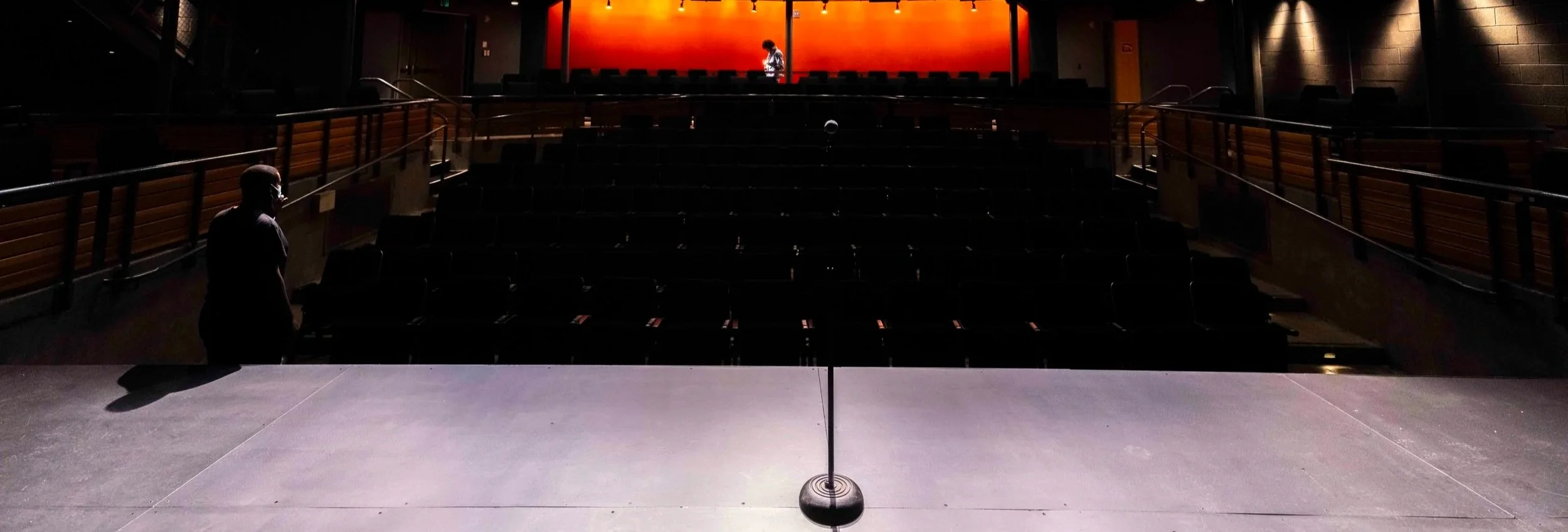
The program has a high production value, and the reputation of BAM meant that high school students from around New York City submitted applications. The program is a hybrid between a “drop-in” style after-school program, where students can sign up at any time and have varying degrees of commitment, and a more “conservatory” style, where students audition, sign an agreement, and are expected to complete or “culminate” the process. A typical culminating ensemble of young people from 2015 to 2019 was between 22 and 25 students, with roughly double that number submitting applications to be part of the program. Students in A&J also attend theater productions and participate in special guest workshops (separate from the guest artists mentioned earlier) that add input to the ensemble’s work, deepening their knowledge of their issue or providing additional instruction in other art forms such as dance. The culminating performance takes place in the 250-seat black box, the Fishman, and involves BAM’s production staff to create a fully professional experience.
A&J involves multiple touchpoints for students to engage with BAM in both the education and production departments, while developing preprofessional skills in performance, playwriting and dramaturgy. The program is an example of how deep and wide engagement can be achieved. Despite budget cuts, certain aspects needed to be scaled back, but the core of the program has remained, and attendance and retention also stayed consistent until 2019, when the pandemic began.
As with every aspect of life, BAM was partially shut down during 2020 and fully shut down for the 2021 season, returning partially in fall 2021. There was no expectation, at least initially, that audiences or students would return to pre-pandemic levels, but what we didn’t anticipate was how the students who did arrive would show up. The students we received in A&J were more introverted, and while no less curious or committed, they were not as adventurous or as confident in their choices. The first season after the pandemic also had fewer returning students than in previous years. Initially, this was understood as a result of time spent learning from home and the reticence all of us felt gathering in large groups. However, at the beginning of the second season, my Director of Education, Ava Kinsey, and I quickly realized it was something else.
Students who had spent almost two full school seasons distance learning had become more anxious and less confident, not only about gathering but also in their own abilities, whether it was artmaking, socializing, or enduring challenges. For many students, A&J had already been their first foray into theater, so it was daunting, but the difference now was that we realized students needed more emotional support than before. Ava had already brought in a health and wellness consultant, Kendall Johnson, a registered therapist and social worker, to work within BAM, and her inclusion in the program was critical in helping students work through the increased anxiety around gathering and completing the process of devising an original work of theater. Additionally, we made adjustments to the culminating show, shortening the runtime. While there was already a focus on ensemble building, with Kendall’s help this became an even greater priority, emphasizing team building and peer connections in daily workshops. The results were immediate. In the two most recent seasons, we retained more than 50% of ensemble members from the previous season. Students also requested that the program be extended, which resulted in A&J’s first double season, with a culminating performance in fall and spring of the 2024–25 season. One hundred percent of the fall ensemble returned for the spring, along with additional new students for the workshops. Through observation and astute adjustments, we found ways to help students feel more supported in the process while still producing the work. This has borne fruit and is helping the A&J program regenerate. Despite pressures around funding to expand reach and grow the number of students served, it's clear through anecdotal research that deepening connections with students, educators, and the process is leading not only to greater success in end results, but also to enriching and supporting students. Arts education grounded in community building and focused on the process and the journey is the evolution that must happen within the field. As a manager, I have learned what it means to value the process and expand support for young people in their socioemotional development, yielding students who are excited and ready to engage in arts programming.