
The War Report From The Pens of Youth Poets
I have witnessed young poets express their dissent of war for decades. I applaud them every time.
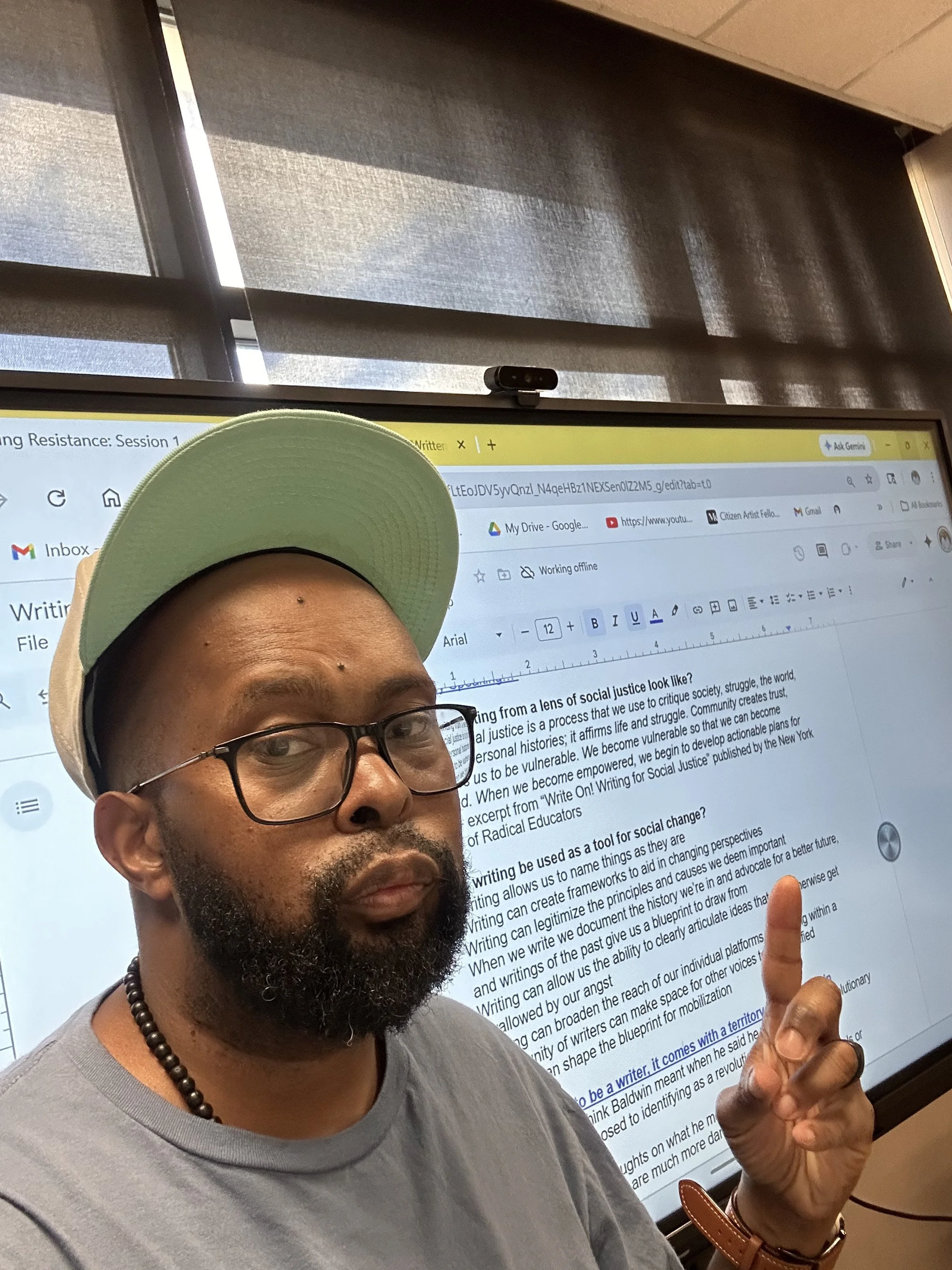
At the top of March I brought my advocacy/social justice-oriented creative writing workshop series, Writing Resistance to Xavier University of Louisiana. Xavier’s main campus is quite literally in my backyard as the campus housing we live in courtesy of my wife’s role as a university administrator makes the journey to the grounds a short walk. I had done iterations of Writing Resistance online a couple times before, so I was excited to teach its curriculum in-person to receptive college students.
My first session absolutely met my best expectations.
I was joined by three young Black women ranging from sophomore to senior classification who had gotten word about the free workshop offering in the university’s library. They came to the session with a general awareness of national/global news and an eagerness to write poetry that spoke their truth to power. Earlier in the week, Xavier held a memorial service for their long-tenured President-Emeritus, Dr. Norman C. Francis, who among other noteworthy accomplishments, once provided on-campus shelter to the Freedom Riders of 1961 while he was in the role of Dean of Men. As one of two HBCUs in the City of New Orleans, Xavier has historically adhered to its mission of promoting a more just and humane society.
It is that core value that allows the Writing Resistance workshop to be in alignment with ideals the university hopes to ground its student body in.

We began the session talking about the power of writing for social change and looking at examples of how writers such as James Baldwin used the power of the pen to respond to revolutionary moments in American history. It was during that discussion that one of the students, Melody, a rising senior, made reference to the current war in Iran. To paraphrase, Melody said that as much as she does not want to think about the war, she cannot afford to not think about the war/turn away from its impact.
The thought of soon-to-be-graduating college student being consumed with how the potential of an ongoing war could impact her post-graduate life reminded me not just how long this country has been in conflict in the Middle East region, but also brought me back to the moment when I was a young poet on my college’s campus when 9/11 occurred and having not-so-nuanced conversations with my friends about war and American imperialism.
In 2001 I shared my angst about war at the weekly campus open mic. In 2026, Melody and the other two young women in my workshop shared their sentiments about war in a writing workshop. The throughline being, that at least for the past 25 years, college students have been talking about, writing about, opining about, war and rumors of war.
As a lifelong literary arts educator, I have facilitated many workshops, and sat in many slams and open mics where youth poets wrote and spoke from a position of protest. I cannot count the number of times I chaperoned/coached a team of youth poets participating in Brave New Voices (BNV) International Youth Poetry Slam where the culmination of the festival week ended in some form of participant demonstration.
For the past two decades I have bear witness to young people expressing their dissent of leadership that has sent some of their loved ones off to combat, or who have experienced some form of anxiety about their safety on U.S. soil while this nation was actively in global conflict. The young people have never been wrong in their assessments, in their resistance, or in their need to craft poetry that reflected the times they were living in.
The people who led them/us were always in the wrong for stoking the fears and anxieties of the citizens they govern, often in the name of greed and occupation.
But despite how grim the poetry from different generations of young poets has been at times, I have never once considered discouraging them from articulating their angst or from calling the powers-that-be to the carpet for sustaining a perpetual war. The arts in general have been a critical tool of anti-war advocacy for generations, and poetry specifically, has often provided language to the material and immaterial toll war takes on humanity.
I love to hear/read young poets write about whimsical things. About love, or weird personality quirks they have. I have encountered young poets write about video games, and their endearing love of family, and being socially awkward — I’ve damn near heard it all.
And no matter how many times I hear a young poet give a literary indictment of a war machine cosplaying as legislators and presidents, I will always appreciate the conviction required to challenge the status quo to actually choose peace and diplomacy.
I consider their words an investment in their futures. Because, it is.