
An Ethos of Hip Hop — Roots, Truth & Culture
My work as a hip-hop educator revealed the tenets that guide my work: roots, truth and culture.
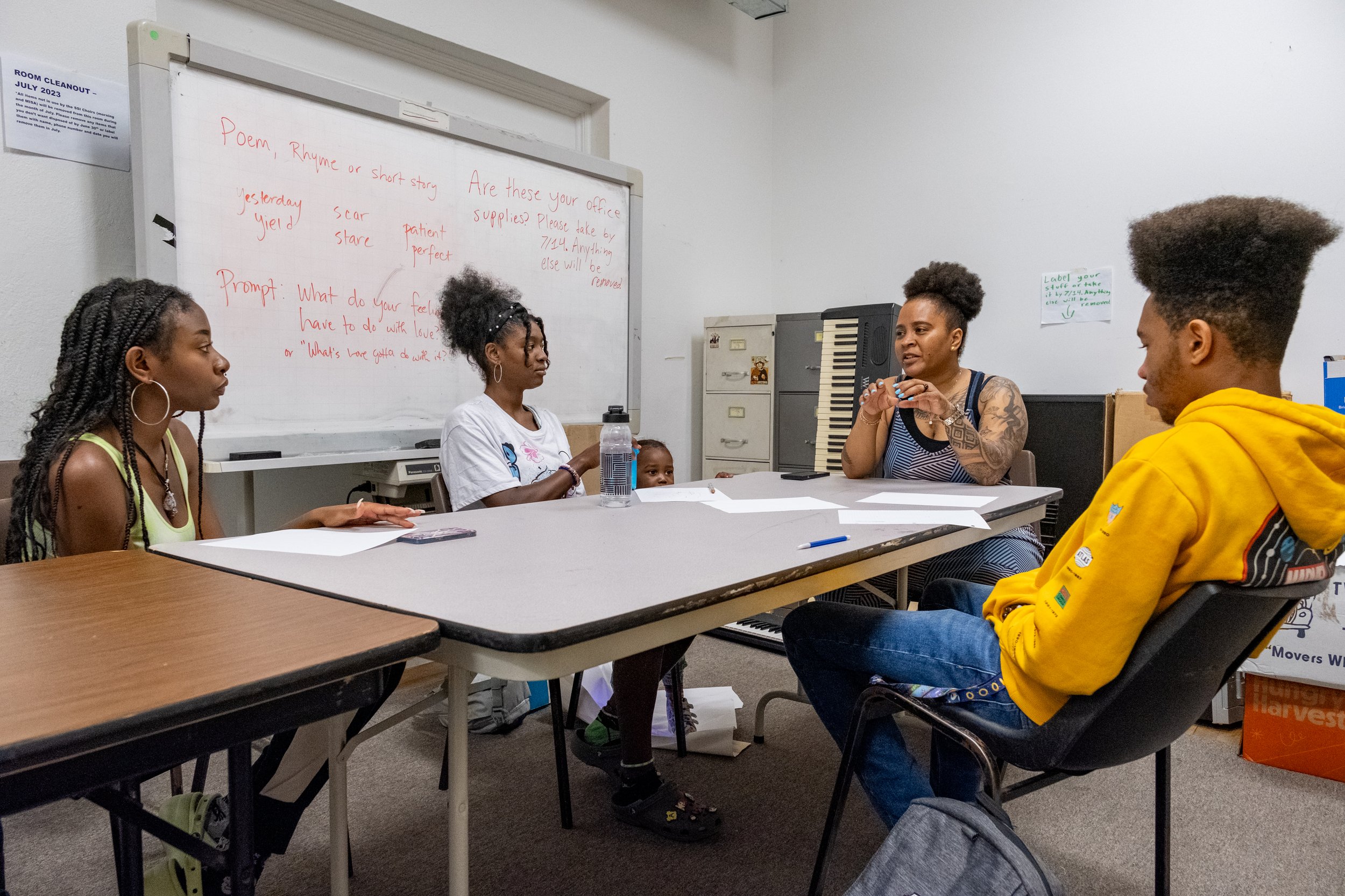
When I became a teaching artist in 2006, my first residencies occurred at a middle school in Mott Haven, where I worked in an afterschool arts program facilitating students writing raps and poetry. Prior to this, when I had thought about hip-hop as a culture, I only thought of it through the five original and core elements: the artistic practices of Graffiti, Djing, Emceeing, Breaking and Knowledge. I understood the “culture” as something you participated in and where you practiced one of the elements. Beyond being a passive listener, to embody the culture it was about the doing. I did not realize that idea would shift once I entered a classroom. I was working with sixth graders, who — while being born well past the time of hip-hop’s golden age — had some exposure to it through their parents and the surrounding area. Some of them already were poets and rappers, emulating the most popular artists at the time. Even though their favorite rap music was far different from what I listened to, they still loosely understood the history and myths of the culture.
This is important because, over the course of that year, I wanted to find ways to bridge the gap between the ideas of the present with the foundations of the past so that we could venture forward in our creative writing together. I was not there to facilitate them making throwback rap joints, nor was I wanting to affirm certain practices in their process, whether it was looking to simply copy another’s style and cadence or to speak about experiences they never had and pass them off as authentic to them. I also did not want to dismiss the art that inspired or excited them. What established a connection was my discovery of what we had in common: wanting people to understand — or at least know — the truth of who we are and how we live. It was the discovery that, while they might be different, ways of communicating, acknowledging and antagonizing within the community operated similarly. Honing in on these shared values helped me realize the ethos in the culture.
On my journey with these students is where I began to identify the three core tenets of my pedagogy, stemming from an ethos that existed in hip-hop regardless of the generation, the style or even other philosophical ideas about hip-hop and rap. What came to the fore were these three ideas: roots, truth and culture. Roots are the origins of ourselves and others, and they also help us find sources of conflict with the goal to understand it and move forward. Truth is the authenticity of our experience, our knowledge and our craft. Truth requires commitment to study and critical thinking. Culture represents the practices and traditions that give us space to express. It was powerful for me to see how these foundations helped cultivate problem-solving, meaning making and collaboration, utilizing rap music and its history as an entry point into conversation with students. Those first two years in Mott Haven were the inspiration that kept me excited about young people and their growth for the next stage of their life. Over the last 20 years of my career as a teaching artist, administrator, curator and scholar who identifies as a practitioner of rap — and an emcee for over 30 years — no matter the classroom or institution I existed in, these ideals continually reveal themselves in the work I am doing. They serve as a connector not only for students to find meaning and alignment between their ideas and the culture itself but also as a way to bring the practice of a hip-hop ideal beyond the conventional production of hip-hop art.
This year on The Counterbalance, I will go into greater depth on my work internationally and locally as a hip-hop practitioner, preservationist, educator, curator and scholar. With more than two decades of experience in arts education and presenting, I will share with you what I have seen, learned and built by implementing these guiding principles of Roots, Truth and Culture. As my teaching artist work has moved from the South Bronx to Brooklyn, and as I have facilitated and presented work in places as far away as Kathmandu and Botswana, it has only been reaffirmed that the culture has many guiding principles that transcend location, language and industry. In contrast, practices, products and institutions who claim to be utilizing or contributing to hip-hop without these principles (or other ideas that are unilaterally understood and identified by culturebearers themselves) are, in my view, inauthentic and operating from a “pseudo” perspective. The culture has been co-opted and commodified by commercial and corporate interest, both in the private and nonprofit sectors, over the last five decades.
Now more than ever, as hip-hop is well placed into “middle age,” it is time to concretize the ethos of the culture, so as to ensure who and what represents it is true to its spirit regardless of the practice or the process. The ideas of Roots, Truth and Culture then are observations I have made that I believe are foundational when looking at hip-hop as an art form, as a philosophy and as a practice. These tenets are instructive and constructive in their purpose — again, they are not the only or definitive tenets, but ones that are easily recognizable and malleable when thought of from a pedagogical and methodological approach to art making, and various literacies. I want this piece to be a text that can be returned to as a measure for work in some of the areas I’ve mentioned and a guide for practitioners to consider when utilizing the cultural frameworks of hip-hop for their practice. Below are the definitions from my research, “Hip-Hop Practice as Pedagogy” published in the Review of Education, Pedagogy, and Cultural Studies in 2020. The paper centered on my time as a hip-hop facilitator for Cyphers for Justice, and it explains seven years of research while I conducted student-centered workshops at the Institute of Urban and Minority Education (IUME) at Teacher’s College in Columbia University. During my time at IUME, I was really asked to investigate and formalize my frameworks, methods and pedagogy pertaining to hip-hop culture. These definitions are excerpted from the essay and are the base of my pedagogy.
“The idea of roots evokes family, anchors, beginnings and the basis of how something grows. To fully embrace and understand the origins of hip-hop culture, we explore the origins of its creation and creators. When thinking specifically about hip-hop music and dance, all of it was founded through re-purposing source ideas and materials from one’s cultural background and the surrounding environments. Herc’s understanding of Jamaican sound system culture, Bambaata and Flash’s reverence and study of records to use the “break” are small examples of this idea of roots.
Anchoring our ideas in what came before, not simply to mimic or emulate, but to expand our knowledge, develop a broader understanding of the world around us, to find new ways of being and creating. This idea of roots isn’t hierarchical or ageist, as this idea can be thought of also as the “root” of a problem, and simply the beginnings and background of any subject. Flash’s need to dismantle the traditional mixer, and restructure it to allow for the fader to be adapted to his specific needs of the “peekabo” method, is another example of this idea. In order for something new, a solution, or innovation to be born, understanding what came before, or the cause, or the beginning is a powerful way to develop greater and deeper meaning into a subject, ourselves or problems and issues that we can face. This approach to roots grounds our art and meaning making in something tangible, while also giving us opportunities to set up connections and foster community.
We see roots within the confines of critical analysis and thinking. To establish context and find conclusions to complex and varied situations, determining the "who's, what's, where's and how's” can lead us to the “why's.” When constructing (or de-constructing) looking at the materials, the plans and the process help to better understand physical as well as ideological structures. The idea of roots as a tenet of hip-hop means within the production of its artistic elements are the seeds to develop the skills that can apply to other fields of study and inquiry.
To think about and consider truth within the confines of hip-hop can be looked at through the idea of “keeping it real.” One of the original laws that guided hip-hop was keeping it real, “keeping it a hundred” or being original. The way in which you garnered and maintained respect in the culture was by being your true and actual self, no matter who you were. Conversely, perpetuating a fraud, representing something you were not or misrepresenting something or being fake is something that could never be celebrated. If there were commandments, keeping it real would be at the top of the tablet. As we think about truth, we are considering this but also include the idea of truth “seeking.” Searching for the authentic within ourselves and others. How do we get to the heart of what is actual, factual and real? How do we represent and honor that truth? Keeping it real is what allows a community to hold itself and others accountable. Truth invites critique, study and observation, and to practice it heightens and strengthens our awareness. Embedded in the idea of “truth” is self-mastery, and that mastery happens through consistency, repetition and critique. This approach to truth authenticates how we produce and create in the culture of hip-hop.
Hip-hop from the very beginning was communal. What started in the jams and parties that dotted the Bronx, Brooklyn and Manhattan was about coming together. These cultural practices emerged from collaboration and camaraderie. Your “crew” was your family; when we consider the relationship between DJ and emcee or DJ and dancer, all of these things had been considered necessary and the representation of the culture. When we think about culture, we embody this ideal, and also participation and practice in the happenings of hip-hop. The music, the song, the dance. At its peak, the culture involves all of these things together, with the community participating. Another aspect that is commonly thought of is the “cypher.” A gathering of people to trade, share, listen and demonstrate their skills, talents, ideas with the chosen community. Without community, without participation in these shared practices, ideas, talents and skills, there is no culture of hip-hop. The spirit of hip-hop itself is rooted in these ideas.
These three tenets are what I believe are at the heart of hip-hop and specifically hip-hop artmaking. Roots, Truth and Culture guide the mechanics and technique of my songwriting, but they also guide the choreography of breaking, the techniques of producing, djing and graffiti. Behind all of these, those three cornerstones drive that production, but also are where much of the meaning making can be derived from.”
When we consider our origins, investigating the sources of knowledge and experience we have while connecting through communal practice, knowledge building and sharing, then we have a frame and a guide to see how it can and does work in classrooms in a range of ways. Hip-hop’s transformative power is precisely why so many have connected or identified with it, for better or for worse. That power has been transferred to people and entities who only see its value as being for propaganda or for profit. This does not mean, however, that the spirit of the culture cannot still be useful and relevant. The ethos of the culture is what will make it evergreen, in the sense that, even as generations change, the character and foundations remain, while evolving. The culture was a product of desperation and defiance that in its best forms makes it a tool to inform, inspire, educate and agitate. The culture is a way to and place to gather, to share and sharpen our skills, knowledge and understanding. The practice of its forms does more than express feelings; it communicates knowledge, cultivates imagination and develops problem-solving. As we continue to write the story, over the next 50 years we have an opportunity to gain an even deeper understanding of hip-hop’s value. I am looking forward to sharing more on “The Counterbalance” blog this year.