
The Need for a Third Space: Teen Space
As public spaces disappear and after-school programs are cut, young people are left with fewer places to gather. The Brooklyn Academy of Music found a simple, youth-centered solution — and the results speak for themselves.
Now more than ever, spaces for youth to gather are needed. An institution in Brooklyn provided a solution
Recently, high school students have been making headlines across the country for the wrong reasons. Recent teen takeovers in Chicago and Orlando have brought national attention and conversation around today’s youth and why they are gathering in these ways. Some argue that lack of supervision and the influence of social media viral trends are the major factors leading teens to amass in the hundreds, and in some cases the thousands, to wreak havoc and unrest. These voices also cite this as evidence of a breakdown in family and community values that long ago had kept children in their place, respectful and obedient, with children being raised to do as they are told and not cause trouble.
A more measured and thoughtful observation, however, reveals something else. As communities encroach upon public space, replacing areas that were previously open and free to the public, with more and more businesses and residential real estate, young people have fewer and fewer places to be between the hours immediately after school dismissal and when parents and caring adults may be home. This is also compounded by the decrease in school funding and staffing around the country, meaning that vital after-school programs have been severely cut back or removed entirely.
In my youth, after school meant a few hours of freedom and personal time to be with friends and explore the town where I grew up. I skateboarded, walked to the local pizza shop to grab a slice and maybe grabbed a soda from the three-in-one store. Sitting outside people watching in the small shopping mall plaza with friends, gossiping or talking about sports took up my time before I had to start heading home to get ready for dinner. The parks, ball fields and the aforementioned shopping plaza were just a few places to be. When I got into sports, this also became a place for me to pass time, and our school was open well into the late afternoon. You could sit in the bleachers in the gym, go to a teacher’s room to do homework or just hang out in the bleachers of the football field.
All of these places would be considered a “third space,” an environment that is neither home or work (in the case of teens, school) that is a social space to gather, foster relationships and build and maintain connections. Numerous studies show that mental health and emotional health greatly benefit from third spaces, and how detrimental it is when these do not exist.
Working in the education department at the Brooklyn Academy of Music (BAM), my colleagues and I experienced a similar challenge with young people where we are located in downtown Brooklyn. The BAM campus encompasses several city blocks, including commercial space, high-end condominiums and other city art institutions, such as 651 Arts, Hi-Arts, Mocada and BRIC. A large Apple Store, the Atlantic Terminal Mall and a Whole Foods are nearby as well. Downtown also includes the Barclays Center. All of these spaces have one thing in common: they are largely meant for consumers and adults. Theoretically they are public spaces, but for most who want to enter, or to be inside, the expectation is that they are buying or paying for entry.
Additionally, in the surrounding areas are several high schools, including Khalil Gibran, Brooklyn High School for the Arts and Brooklyn Tech among a few others. This meant a recipe for exactly the type of circumstances that have happened recently in Chicago and Orlando. A manager and I in the winter witnessed an episode of more than a hundred teens running through the streets, seemingly toward or away from an event that we could not see from our vantage point from our windows several stories above the street. We later found out that a fight had broken out between a few of the local students that had spilled into the area in front of the mall.
There had been a long-standing rule in the mall that teens were not allowed in unless escorted by an adult. The mall, while full of stores, also has open lounging areas with benches, small food kiosks and a McDonald’s. These had been attractive gathering spaces for teens until they were discouraged from frequenting and altogether banned from being there because of the rule. With most of the downtown being taken up by businesses (there is a very small open-air park that sits as a fork between Fulton and Lafayette streets, where students often congregate in good weather), the potential for a “takeover” was high.
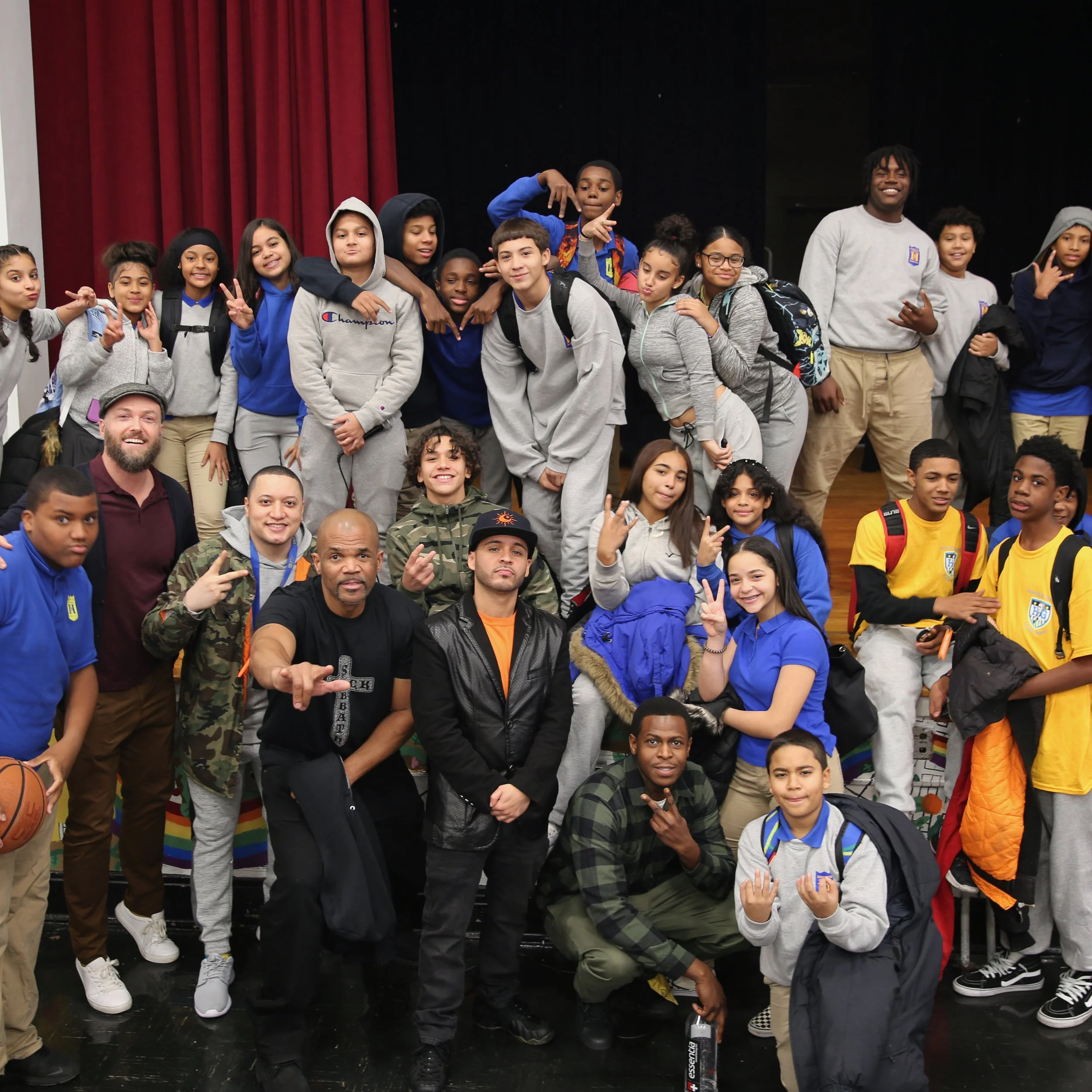
This is where BAM education was called to action. President Tamara McCaw saw an opportunity, something that Director of Education Ava Kinsey did as well. Because of the need for a third space for teens to gather in the afterschool hours, “Teen Space” was piloted this past winter and spring. With input and consultation from the teens in our Brooklyn Interns for Arts and Culture program (BIAC) and with support from our president's office, once a week between the hours of 2:30 p.m. and 5:30 p.m. our banquet hall, The Adam, was transformed into a teen lounge equipped with a karaoke station, card and board game stations and free water, juice, snacks and pizza.
The program ran from the beginning of February to the beginning of April, to great success. Over the course of the program, up to 60 teens would congregate and cycle in and out of the space. Supported by BAM’s production department and front-of-house staff along with the BAM education team, we provided a third space for teens to gather, play and simply be without worry of being profiled, harassed or oversupervised. The goal and implementation were simple: provide an inviting space and safe environment where teens could come, socialize and engage in activities of their choosing with intentional but light supervision from adults. Instead of looking at teens and students as an annoying problem or as a source of anxiety for the community, we looked at how we could better utilize creative space to meet the needs of some of the younger members of our community.
Not every institution may have the budgetary or physical capacity to adapt a similar model. BAM Education has the benefit of being inside one of the largest presenting houses in the city and having an ethos in our programming that requires us to produce youth-led/centric programming that treats our students as partners in the programming. This meant that the feedback from teens was overwhelmingly positive, and the hope is to continue the program in the next school year. One thing that we absolutely learned from Teen Space was that, when teens have agency, and a space of their own, it provides the opportunity for their development and for them to thrive as they mature into adulthood.