
Dear (My) Mama: On 25 Years of Absence and Tapping into the Power of Revolutionary Grief
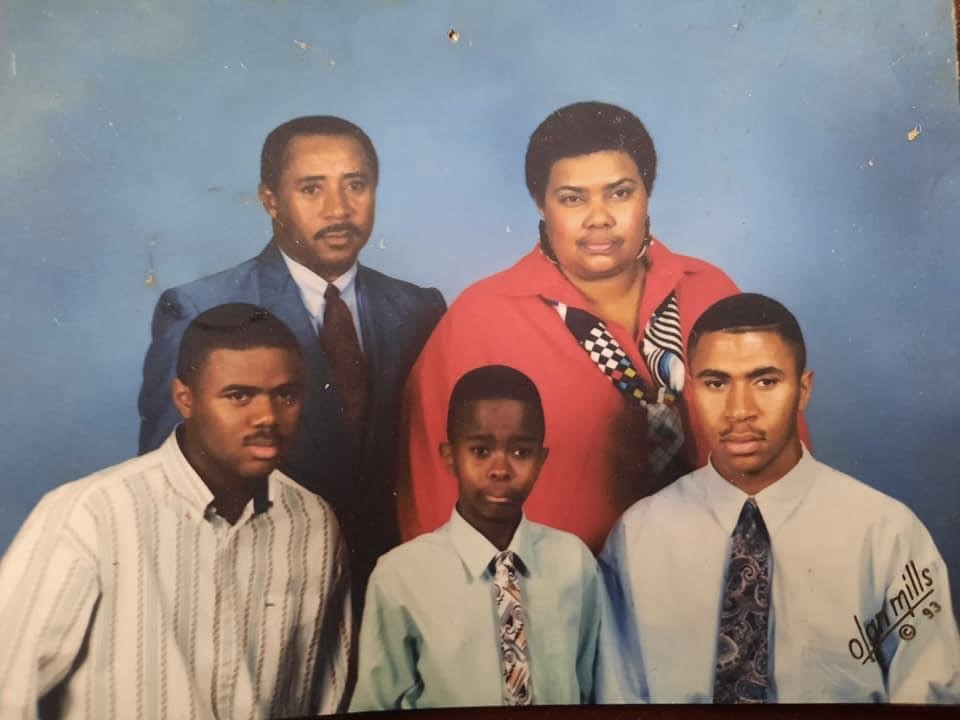
The Rose Family. Circa 1990
This April will mark 25 years since my mother transitioned. I was the first person to find her lifeless, and it is still the single most consequential moment I have ever experienced. I was 20 years and four months old when she left this realm. A young poet and college student who thought he had outgrown his mother’s nurturing.
But here I am, 25 years later, re-examining all the ways that the concept of motherhood, and being mothered is foundational to a lifetime. And those reflections, realizations and levels of processing have found its way to the epicenter of my present-day artistic, communal, and wellness practice.
My mother lived for two decades with lupus, from the late 1980s to 2001. Lupus, a chronic, incurable autoimmune disease where the immune system mistakenly attacks healthy tissues, wreaks havoc on Black women unlike any other demographic. During the period of her suffering, the disease was just beginning to be recognized as a major illness that carried a hefty mortality rate for those who were afflicted by it. I have known other Black women who were diagnosed with lupus within the past quarter-century whose health has sustained due to advances in how the disease is treated.
When I think of my mother’s departure, I often think about the cruelty of a timeline that would position her struggle within a history void of the medical developments that could have extended her life.
Over the past decade, I, like my mother, have dealt with the complexities of autoimmune illnesses. Unlike my mother, I have benefitted from expanded research and medicinal therapy at the behest of scientific breakthroughs that have come about since the turn of the 21st century. My mother was a schoolteacher, and I became a teaching artist, arts administrator, and relatively acclaimed performance poet in the years since she passed, utilizing hip-hop and spoken word pedagogy as a means of educating, similar to my mother who taught reading comprehension.
In my current role as a Community Health Worker through a Black and African diasporic-based arts and culture center in New Orleans, I am combining my lived experience, my artistry, and the grief of losing my mother in her late 40s in doing the work of dismantling a 25-year gap in life expectancy that exists between Black and white New Orleanians. Before writing this sentence, I had not previously considered how that gap in life expectancy ran parallel to the amount of years I have not been able to wish my mom a happy Mother’s Day. I suppose I have been too focused on how to use my talents, time, and resources to assist Black mothers, fathers, aunts, cousins, godparents, and best friends with getting access to the healthcare they need so their days with the ones they love may be longer.
From an artistic standpoint, I am working on a narrative project called “Eternal Anna” named after my mother (Anna) that involves close friends and family members sharing stories of cherished memories they have of her. The plan is to weave their audio testimonies with poetic prose into one sonic tribute to my mom ahead of the 25th anniversary of her transition. I have begun receiving soul-stirring tributes that have been both heavily emotional and cathartic to listen to.
I am offering myself the grace and tenderness that is required to complete this project, similar to the grace, and love, and discipline, and teaching, and nurturing my mother poured into me until she was no longer able to.
It is that love and care which keeps her memory from getting too far out of reach. It is also what deeply informs the way I show up for others, as well as how I continue to show up for myself.