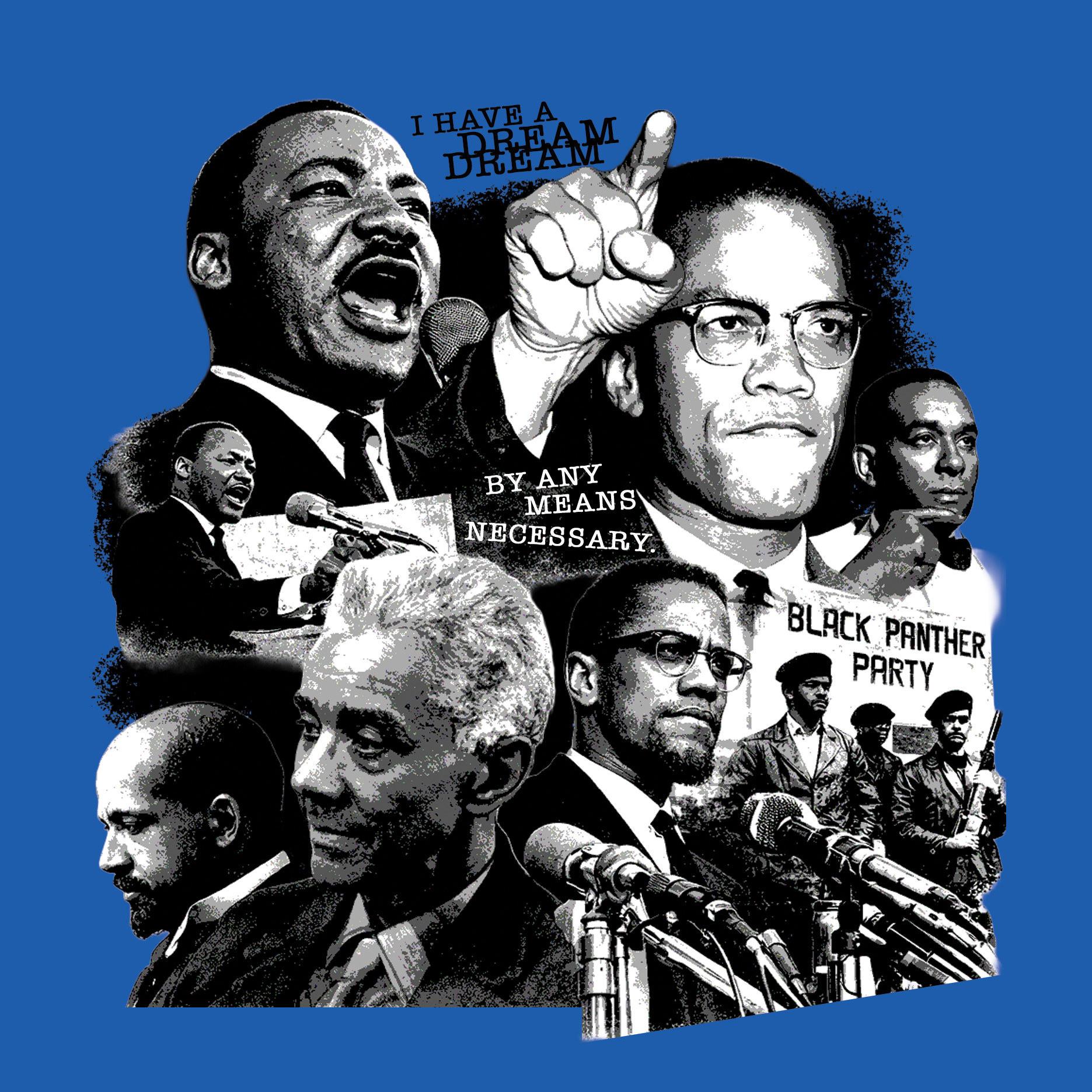

This essay proclaims that The Last Poets as spoken word artists existed as the cultural hinge between the Black Radical Tradition and hip-hop. Beginning on May 19, 1968, the anniversary of Malcolm X’s birthday and during the aftermath of the assassination of Martin Luther King Jr., a group of street poets and public intellectuals known as The Last Poets became the nexus that connects the Black Radical Tradition to the coming of hip-hop. Their debut studio album entitled The Last Poets (1970) drew from the intellectualism of W. E. B. Du Bois, C. L. R. James, and Richard N. Wright as Black Radical Tradition pioneers, and the “revolution-talk” of Malcolm X, whose life and legacy inspired the Black Panthers. The Last Poets’ music and ethos reflected an admiration of the Black Panthers who were mobile and visible during the time in which the group formed (Ogbar 111). The poets also drew from the emergence of cultural Black nationalism, inspired by the Black Power movement. The Last Poets’ early works have become worthy of serious consideration in order to have a complete grasp of the social, political, and economic context of the transitional period of the late 1960s through the early 1970s.
First, using poetry laced with rhetorical rage, humor, and lamentations in the prophetic tradition of Black Jeremiad, The Last Poets spoke with a general message that defied linguistic bourgeois respectability to address institutional injustices using the language of the common person. With words, they expressed the “unrestrained viscerality” (Taylor 182) of the streets, yet balanced with a comical aspect. Through spoken words, the poets wept on behalf of the voiceless while, like Martin and Malcolm, warning all people that complicity with the status quo will lead to utter downfall for everyone. In the tradition of Du Bois, James, Wright and their intellectual successors, The Last Poets told the story of the Black underclass and their plight, while disclosing elements of such a struggle that remained misunderstood throughout the twentieth century and beyond.