
Give Tha Drummer Some
A spoken-word tribute to New Orleans street percussionists in celebration of Black Music Month 2026
The month of June is the designated month for a number of cultural and identity recognitions that spotlight marginalized histories. Although widely known recognitions such as Pride and Juneteenth are ubiquitous across corners of the United States and abroad, June is also the 30-day acknowledgment of Black Music Month, or African American Music Appreciation Month, which celebrates African American musical influences that add to the tapestry of American culture.
As a writer whose life essentially revolves around the rhythms, lyrics, tones and expressions of Black music, I have spent the past few years creating short-form literary projects in honor of Black Music Month. Whether assessing the socioeconomic conditions that produced the “jigg” rap of my hometown of Baton Rouge, examining the impact of gospel music on my upbringing and personhood, or writing poems in response to Black musicians whose artistry shaped my own, these creative writing projects have always felt organic and soulful. The projects allowed me to dive into everything from the origins of certain genres to liner notes that informed me of lesser known songwriters and composers and the often compelling back stories of certain classics.
This summer is my second as a resident of New Orleans, one of the meccas of Black music and culture. My current Black Music Month writing project, “Give Tha Drummer Some,” is an epic spoken word piece soundscaped by the rhythms of street percussionists. I have long been a fan of community drum circles and fascinated by “untrained” drummers who make sonic magic from drumsticks and upside-down paint buckets. Over the past few years, I have captured audio from various drumming sessions from D.C. to South Louisiana and varying points in between. However, the impetus behind “Give Tha Drummer Some” was mostly inspired by the specific craft of street percussion in New Orleans.
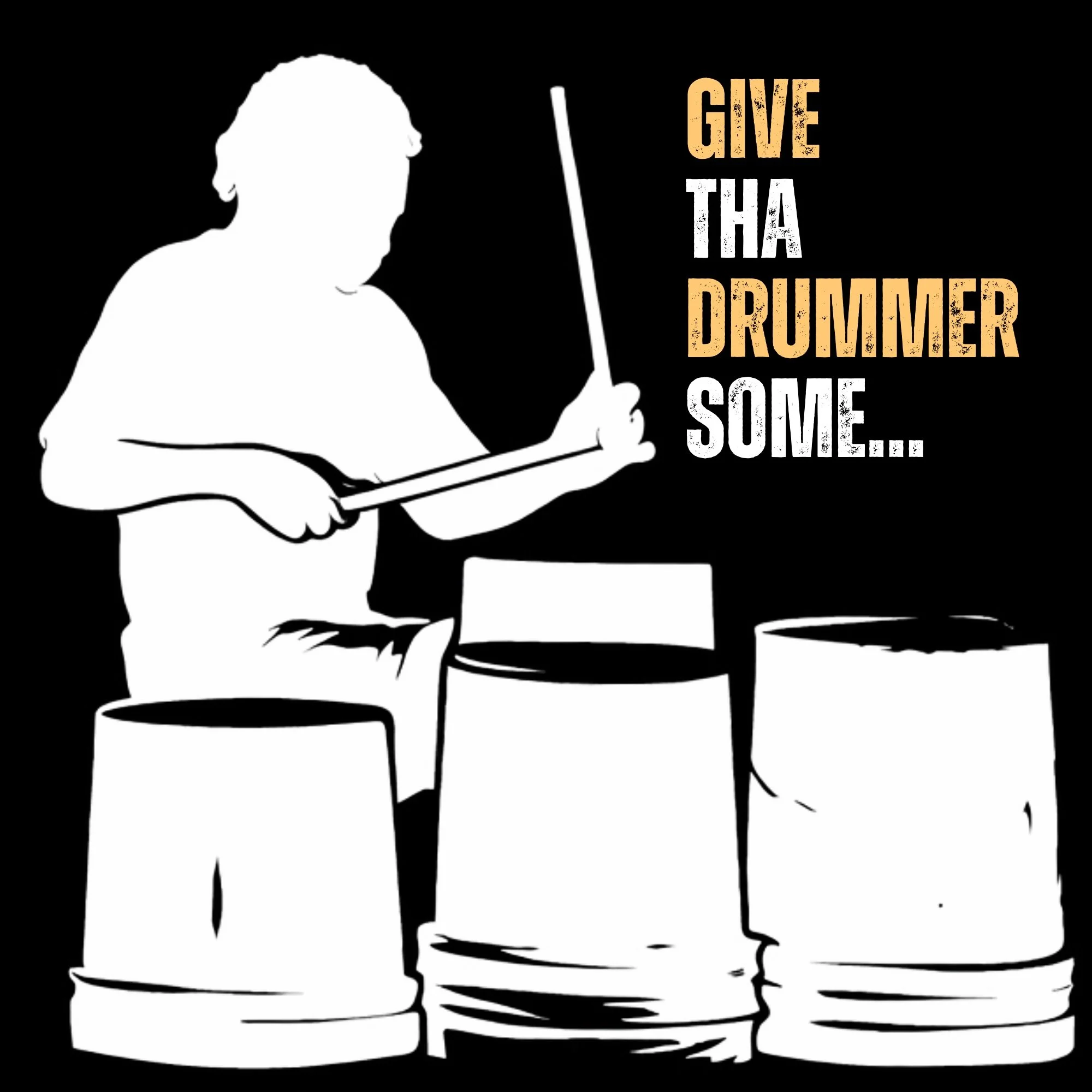
Image designed by Donney Rose
The history of street percussion in New Orleans dates back to the 18th century as a ritual curated by enslaved Africans and free people of color to preserve West African drumming traditions. The sacred grounds known as Congo Square, the current site of Sunday drum circles, was also the location where enslaved Africans came together in the historic Tremé neighborhood to play and fellowship. These sessions predate New Orleans’ iconic second line culture where drummers adapted military marching drums (snare and bass) into the street parading tradition, paving the way for jazz pioneers to blend marching beats with drum kits.
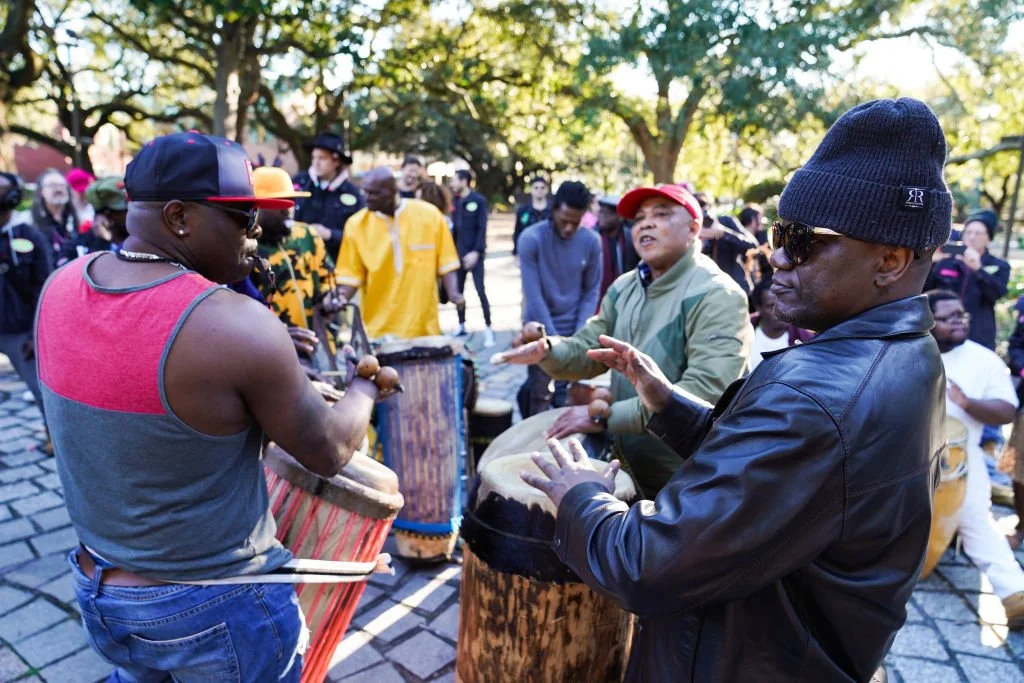
Erika Goldring/Getty Images
It is not at all uncommon to peruse the French Quarter or visit Louis Armstrong Park in the spring and summer months and come across some of the most dynamic percussion instrumentation you will ever hear. Children as young as those in their single digits are often the rhythmic conductors of grooves that cause pedestrians to pull out their phones and open their wallets to generously tip. In New Orleans, there is almost no such thing as an “amateur” musician because the musical DNA of the city flows through its arteries, finding its way into the natural ability of anyone interested in exploring their talents.
In a city world renowned for its food, culture and art, it is often the unexpected gift of a corner jam that makes the New Orleans experience come alive. Those jams are animated by the syncopation of snare drums, congas, bongos, buckets and bass drums curated by street percussionists whose primary focus is to play the heartbeat of the city as a continuous groove.