
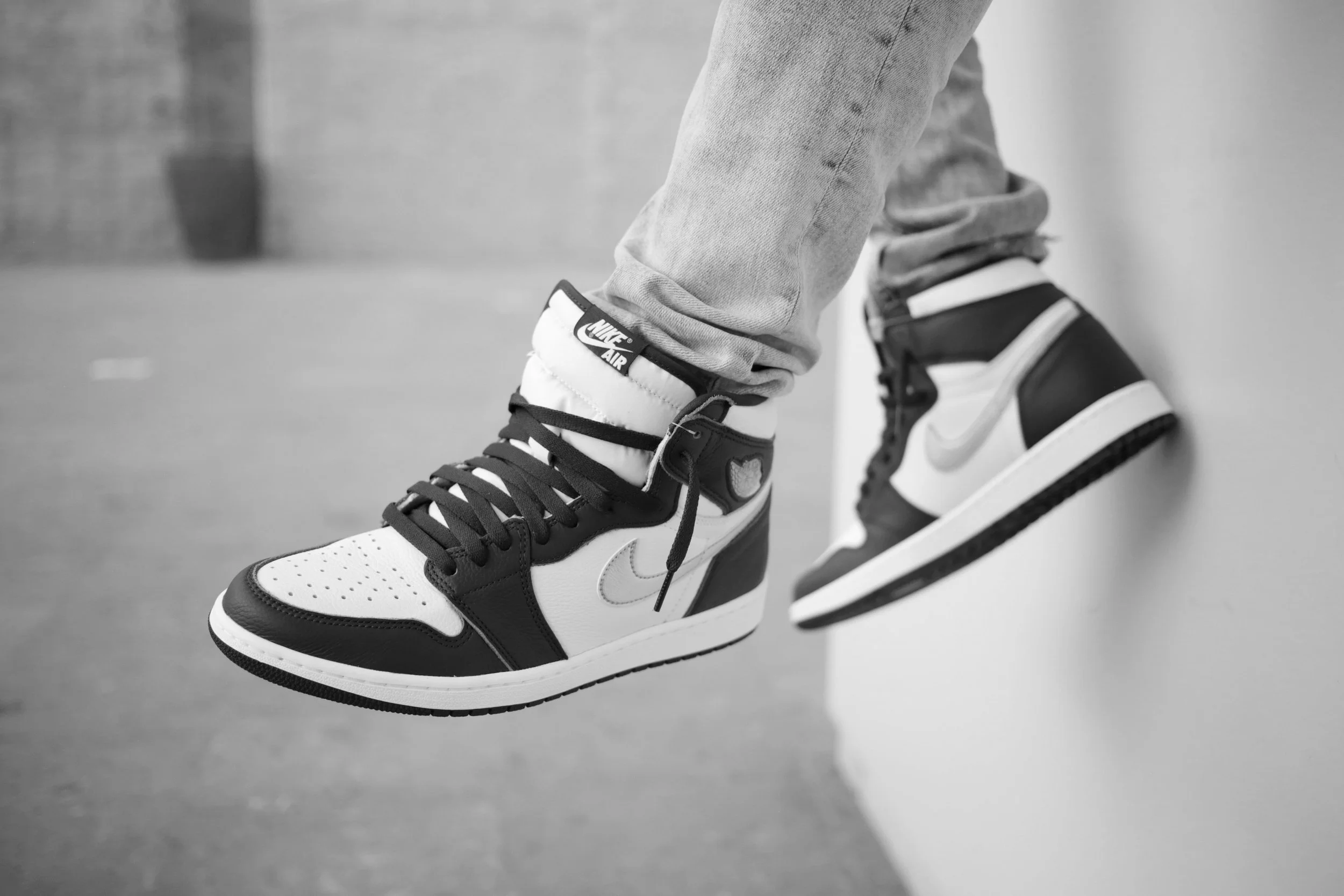
New York City sneaker culture of the 1970s and early to mid-1980s, as documented by Bobbito Garcia in his exhaustive history, Where’d You Get Those?, formed around the idea that sneakers could be worn as both instruments of self-expression and vehicles of social belonging. Its fashion-conscious practitioners, who glorified brand names and hard-to-find models, believed in the “high symbolic and capital value of the athletic shoe” (Wilson and Sparks 421). This belief—that material goods connect us to the world—gave meaning to their consumption experiences, transforming the quotidian purchase of a new pair of Nikes into a bona fide rite of passage. If those Nikes were “rocked” or “flipped” in a novel way, or if they had been acquired on a “mission” to a clandestine shoe spot, they could earn the wearer status and authority, traits highly regarded by the burgeoning hip-hop movement of which NYC sneaker culture was a part.
Hip-hop has long been criticized for placing too much emphasis on visibly conspicuous products like clothing, jewelry, and expensive cars, and it can be argued that early sneakerheads contributed to hip-hop’s mechanism of desire by attaching otherworldly significance to otherwise worldly goods. But while this may have been the result of their fetishism, it was—according to the many interviews in Garcia’s book—not their original intention. For what they were trying to do was “symbolically explore fashion . . . as a means of exercising cultural power,” asserting one’s individuality and sustaining an interpretive community of like-minded peers (Wilson and Sparks 405). They could not have predicted how important or influential sneakers would one day become, or the role that sneakers would play in the juggernaut of music-centric consumerism. They were too busy being fly.