

Edutainment is Needed Now More Than Ever
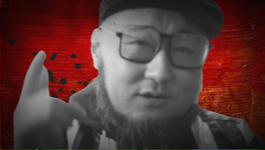
Kensho Kuma
From KRS-One to today, hip-hop has used music to educate, resist and speak truth to power.
Kensho Kuma is carrying that tradition forward.
Kensho Kuma is in the tradition of artivists from hip-hop culture. While hip-hop originated from the park jams and the party, it has social justice embedded in its DNA. While arguments continue about who its originators or its most important contributors were based on their race and/or ethnicity, the unifying trait is that it came from the conditions and voices of the poor and working classes. The music, dance and expression that are the heart of hip-hop can be seen as a release, and a way to celebrate joy amidst very challenging times and conditions, but it can also be seen as assertion of self-determination and resistance.
The communities that were in the Bronx, Brooklyn and Harlem were (and in many instances still are) often the oppressed and the forgotten, living in areas that had been divested from, overpoliced and specifically targeted by city and private corruption. What does it mean to defiantly and openly express your presence despite the forces and systems that are working against you? The rebellious and yes, at times, radical feel of hip-hop is born of that reality.
Even though rap specifically has probably been the most co-opted of the four foundational elements (capitalism has almost ignored breaking and graffiti, as well as beatboxing) by corporate and political entities, its power to tell stories and speak truth to (for and against) power helps it retain some of its own ability to be used as a tool and a weapon in anti-oppression efforts.
One of the earliest recorded rap records, “The Message,” literally is social commentary on the abject conditions hip-hop sprang from, styled as a rant/manifesto by Melle Mel (who infamously allegedly didn’t even want to record the record). Fast forward almost ten years from that moment, to when KRS-One releases the album “Edutainment”. By this time, the beginning of hip-hop’s “golden era” has started and, with it, a shift in the music’s focus to overtly be a voice globally against oppression.
The significance of “Edutainment” is in the unapologetic assertion of its purpose, as KRS said at the time in the record’s intro: “And what I would like to bring out today is rap music as a revolutionary tool in changing the structure of racist America.” You can find so many artists from Dead Prez to Rapsody who have taken up a similar mission; the protest is as much a part of the body of rap as the party is.
Kensho Kuma is one of the artists currently taking up that work and that tradition. As a Gen-X hip-hop head and artist myself, who grew up influenced by and steeped in this era, I can relate not only to his style and sound but also to his purpose and mission to make music that reflects the times, his lived experiences and reality while directly addressing and speaking against imperial systemic power.
Kensho is based out of the Bay Area, a middle-school teacher and licensed substance abuse counselor who emigrated to the U.S. from Japan in the mid eighties. His early West Coast influences gave him a love of the craft and the culture, while his lived experiences and study gave him the subjects and content for his music.
Part of a catalogue that spans more than two decades, his latest song “Immigrants Anthem” is a timely and poignant rebuke of the current administration for its attack on non-white immigrants. Over a booming boom bap beat, Kensho sets the scene for what we see happening every day across the country.
Kicking down your door. The grandmother's pray.
They don't even need a war and ICE ambush and rape. What?
National Guard called in by the president is fascist and wrong.
What they do to the resident. Yeah.
Mi gente demonstrate them resilience
while they keep acting out of hatred and ignorance.
We demand our human rights and the due process
to be treated equally is why these dudes protest.
He also aligns himself with the communities who are under threat.
I was raised with the Mexicans, Jews and Blacks.
We are safe anywhere. Spot the booby traps.
A background diverse that I serve when I rock.
You can feel the influence of the turf and the mosque.
They want to blame the town for their murders of block,
but to me it's beautiful. Yep. And worthy of love.
With the end of the song, he states his intentions and sets a mandate for us all.
Peace to the Filipinos in Daly City.
The biracial women in the Bay are very pretty. Yeah, hella inclusive.
Celebrating the city forever independent. We maintain longevity.
They form the prejudices based on phenotype.
If you acting like a bigoted racist, we going to fight.
You can find me in Berkeley with my A-alikes
and enough with the conflicts. We got to save some lives.
Kensho’s message is clear, as are his politics, and as someone steeped in the culture, he uses his lyricism to call out oppression but also to sound the alarm and implore whoever is listening to take up the call.
The anthem for immigrants, put them hands up
if you ever been oppressed then you best to stand up.
If you still feeling broke then get your bands up.
Peace to the refugees from the foreign lands. What!
Now more than ever, art has a responsibility not only to entertain or to bring joy but also to reflect the times and the lived experiences of the people who are systemically and materially oppressed. The beauty of hip-hop and rap specifically has always been its ability to up-rock and chew bubble gum at the same time; while Kensho is making your head nod, he is also getting you to raise a fist.
Listening to Kensho’s song shows that he’s carrying on the tradition and doing it with the dopeness that is necessary for hip-hop. The song is from a forthcoming collaborative album between Kensho and producer Far Beats; you can listen to it here, and if you want to learn more about Kensho and check his catalogue, you can do that here.
