
Damage Control: A Lesson in Community Event Organizing
What happens when your passion for building community starts pushing people away? Donney Rose reflects on two decades in event organizing, the hidden toll of anxiety, and the hard lessons he learned about leadership, stewardship and how we treat the people who help bring our visions to life.
I was a college student in my early twenties when I got into event production/promotion. My homeboy Ron and I had been hosting the weekly poetry reading on our college campus, and wanted to “take our show on the road” into the nightlife scene. In the early 2000s, a number of young Black male entrepreneurs in my hometown of Baton Rouge started event entertainment companies as a means to compensate for the lack of Black-owned venues in town, which led to young brothers going to the Secretary of State office to file company names as limited liability companies (LLCs) so that our ventures would look official on flyers.
Me and Ron started Simple But Dope Productions, LLC in early 2002, and focused on producing performing arts events, both as a counter to the saturated party promoter scene and because it was more naturally aligned with our interests.
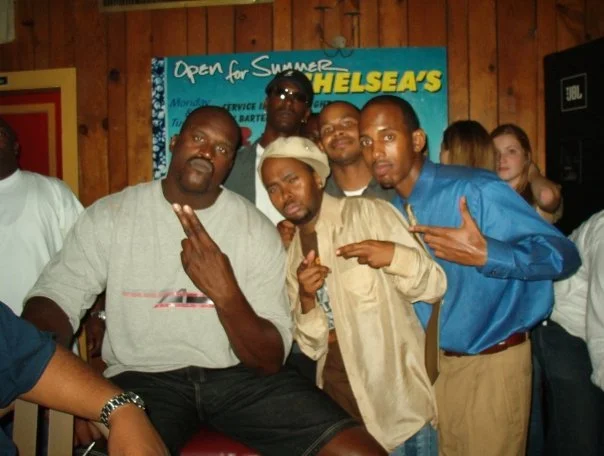
Shaquille O’Neal attends a Simple But Dope Productions event shortly after winning his third consecutive NBA championship with the Los Angeles Lakers.
Photo by Baham Laboratories.
I remember the first event we produced was a Valentine’s Day poetry show that featured a ridiculously low price discount for couples and singles that we hosted in the back room of a pub called the Fox & Hound. We swelled the room beyond capacity, and I ran around like a proverbial chicken with my head cut off between the stage, the audience, and our door persons to ensure that my first official dive into event production went off with as few hiccups as possible.
A monster was born that night that took me many years to expel from my character, as the event production/promoter version of me moved with a ruder and snappier energy than my normal self. My younger, cocksure attitude did not consider how my event coordinator demeanor was quite the opposite of my usual laid-back persona. I just wanted to have successes, and was likely mimicking some of the inflated egos of hip-hop CEOs/impresarios I saw throwing their weight around on television.
Whenever my friends and community would see me in “event mode,” and express some version of the sentiment “Donney’s trippin’,” I chalked it up to them not having a full understanding of how serious it was for me to have my productions go off without a hitch. I was a recent marketing graduate and a performing artist in a city that undervalued performing arts; therefore I felt like I had no margin for error, and it did not matter how anyone felt about how I was behaving while I was in the midst of event curation.
In the first five to seven years of producing events, I formed a few collectives of mostly volunteer-based street teams. My “support staff” on the ground were primarily friends who worked as door people, and those who were audio/video savvy, de facto tech support. I often moved about menacingly and riddled with anxiety I could not name. My people put up with me as much as they could as they knew that was not my temperament outside of event nights.
I kept having to cycle “my help” in and out, while not understanding why my friends were pivoting to supporting my endeavors from a distance as opposed to remaining hands-on. In my quest to execute enjoyable, substantive live entertainment events, I was souring the vibe for those who were supporting me in the most tangible way. I dismissed their feelings as the collateral damage that came with doing business.
It wasn’t until I began working as a teaching artist and in the field of youth development that I was even able to remotely acknowledge my behavior patterns as an organizer. Early in my career, I was tasked with being an event manager of the youth spoken word organization I worked for, and being a lead producer of our city’s annual citywide teen poetry slam festival. Initially, I took my take-no-prisoners approach to that curation space, and it was noticed with dismay immediately.
My girlfriend-turned-wife would often be approached by volunteers of our teen poetry slam festival who were wondering what was up with me. She would usually reply something to the effect that my desire to see everything go perfectly for our youth caused me stress, and would ask my community members to pardon my “extraness.” After the festival events would end, she would tell me about how my attitude and demeanor was off-putting to volunteers and youth slam team coaches and others who were essential to the success of our festival.
And I, for a long time, remained dismissive as I felt that they too could not understand what was required to make great things happen.
It is possible that my change of heart came at the behest of tragedy. In 2013 one of our former youth poets died in a drowning accident. Then in 2016 another of our youth poets died mysteriously after competing on behalf of our organization at the Brave New Voices International Poetry Slam Festival. In both instances, our larger youth spoken word poetry community came together to memorialize our too-soon ancestors, and something unlocked in me.
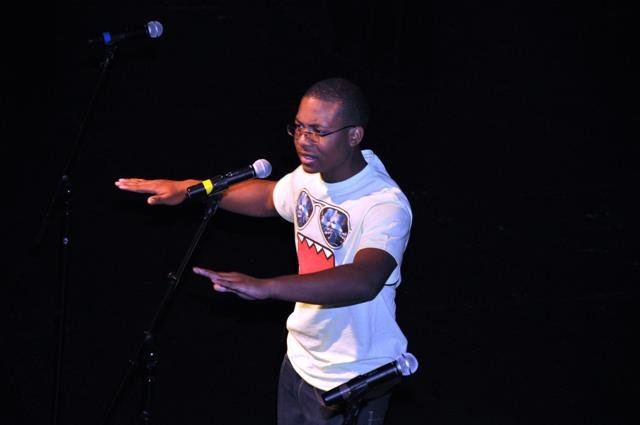
James Briggs performs at the 2012 ALL CITY Teen Poetry Slam Festival before transitioning in 2013.
Photo by Leslie D. Rose.
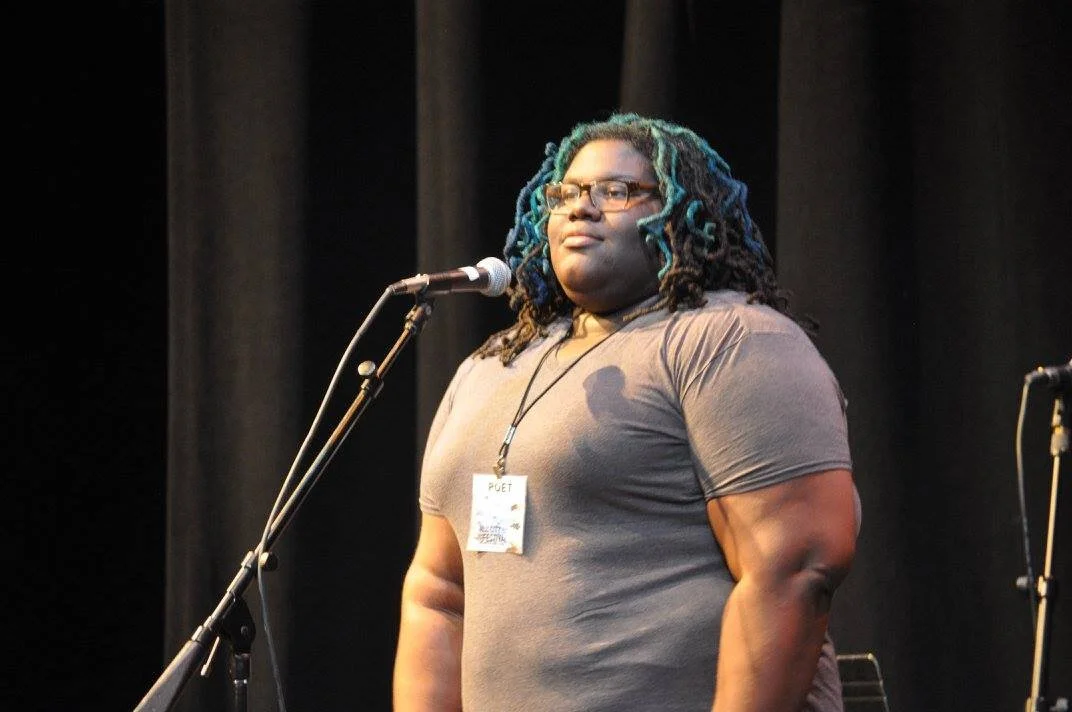
Kaiya Smith performs at the 2016 ALL CITY Teen Poetry Slam Festival. Smith transitioned later that summer.
Photo by Leslie D. Rose.
Besides the shock and grief of losing two of the brightest constellations in our youth poetry community who both navigated the scene with grace and openness, I developed a more profound understanding of what it meant to be a good steward of the community. I saw that my legacy would not be defined by how many audiences I helped pack, or how good a job I did at selecting featured artists, or how efficient my run-of-show was. I began to internalize the iconic quote by the late great Maya Angelou: “People will forget what you said, people will forget what you did, but people will never forget how you made them feel.”
It took me just over 15 years of event organizing to grasp the idea that when the community decides to get dressed, leave their house, pay a cover charge, and seek to be entertained, the job of maximizing their experience is not the responsibility of the “main attraction.” In fact, it could be argued that the most lasting impression that will be made will always be that which the organizers leave.
I learned later in life that I had actually been dealing with undiagnosed clinical anxiety throughout most of the time I was heavily doing event organizing. Receiving an anxiety diagnosis helped contextualize for me why my nervous system was responding the way it was when I was spearheading community events, but it does not excuse any harm caused.
And though I can’t go back in time to edit the moments I “flew off the handle” in the name of executing events to the best of my ability, I can acknowledge how flawed my practice was, and offer a word of advice to community event organizers:
Your outcome will never be bigger than the humans that help your vision come to life, show up in support of your efforts, or lend their talents to amplify your productions. Practice damage control. And remember that if everyone decides that you are too unbearable to deal with, you will turn the lights on to empty seats regardless.