
My Hip-hop Rap-up for 2025
From landmark rap beefs and political controversy to AI experimentation and standout albums, this piece reflects on what defined hip-hop in 2025.
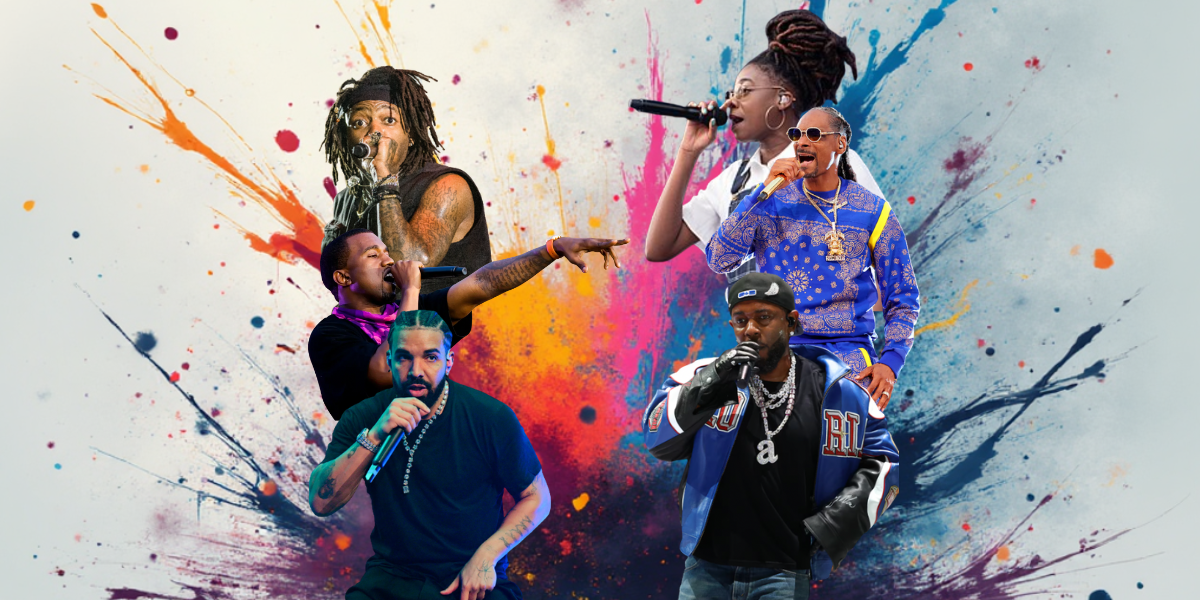
Hip-hop, two years on from its semi-centennial, had a weird, inspiring year. Hip-hop is officially middle age. When you think of American music, the half-century mark usually means a genre is riding off into the sunset, passing the torch to the next new thing, if not being gently put out to pasture. Even though hip-hop dropped out of the top 40 Billboard charts, the music and the culture still have a bit of life left in them, and even though Taylor Swift is still what almost everyone seems to want to talk about, it was the hip-hop culture that continued to dominate many headlines, for better or worse.
When keeping it real goes right
So, the rap beef of the 21st century (or at least since Nas vs. Jay-z) technically happened during the second half of 2024; however, its staying power and fallout spilled over into the start of the year. “Not Like Us” was not only the anthem for 2024, but it served as a referendum. It has been decades since the debate of keeping it real, vs. selling out and going pop had taken place, but Kendrick Lamar brought it back in a major way, and, if only symbolically, the culture still won. Kendrick’s victory lap included a Grammy win and one of the most memorable and controversial Super Bowl halftime performances in its history. Drake’s scarlet letter and walk of shame include a court case suing his own label with the argument that, basically,
“You all cheated to get Kendrick Lamar’s numbers, and I know because you cheated for me.”
Drake ultimately had to take another "L" as the case was dismissed. Still, you might ask: Why is this rap soap opera any different or more important than others that have happened in the 2000s? Well, for one, like Jay-Z vs. Nas, this took place between arguably the two undisputed GOATs of their era.
In exposure, popularity and influence, it’s hard to argue there have been two more seminal figures in the 2000s than Drake and Kendrick, who had been quietly dissing each other for almost a decade. But even more than that, Kendrick, at least for a brief time, brought the mainstream conversation back to the craft and the code of the culture.
It also wasn’t simply about his now iconic song, but also the album "GNX," which saw a commercial hip-hop artist really rep and pay homage to the region they were from. It seems small, but we take for granted the fact that hip-hop’s sound has been homogenized in the mainstream for almost 30 years now. Kendrick didn’t just wage war on Drake; he waged war on the facsimile of hip-hop that had stood in for the culture itself. And the culture won.
When keeping it real goes wrong (really wrong)
Earlier this year, I wrote a piece on fascism in rap, and in it I low lighted some of the culture’s most well-known figures seemingly advocating for right-wing supremacy. Whether Snoop's inauguration performance for Donald Trump (alongside Nelly, Rick Ross and Soulja Boy) or Kanye’s antisemitic tirades, it very much felt as if OG’s and seemingly all-time greats had lost their minds. The year 2025 was when the mask fully came off and the corporate face of hip-hop showed its ugly head. Considering rap as a genre had for decades been synonymous with social justice and community, it also has been way too cozy with capitalist, patriarchal and yes, fascist ideas — something Dr. Tricia Rose exposed all the way back in the '90s — so we shouldn’t be surprised.
When keeping it real goes…AI?
And then there is artificial intelligence. Timbo tried it, and so did a slew of artists, both novice and legendary. Artificial intelligence, much like social media a generation earlier, invaded our consciousness, and the powers that be have a new way to colonize the mind (and body and spirit). The ethics of this “new” technology are being debated, and one of the most highly contested battlegrounds is the artist arena. As the world decides if we’ve unleashed our mechanical overlords or if this is just another capitalist gimmick to scam us out of our hard-earned dollars (and diminishing job prospects), rap has been at the front of the line, steaming ahead, utilizing this new (?) technology. Even though it’s bad for the environment, bad for workers and could be a leading contributor to our cognitive and moral decline, some may have found positive ways to use this new tool — shouts to The D.O.C. and Beanie Sigel.
And the music…
And of course, this was an amazing year for hip-hop music. There were too many artists to shout out in one rap-up (I could write three or four and still not cover everything that was dope this year), as everything from the independent to the mainstream delivered serious heat. Not only that, but this was an amazing intergenerational year as well. With that said, a few of my personal favorites and standouts were:
“Cabin in the Sky” by De La Soul
“Lotus” by Little Simz
“Let God Sort ’Em Out” by Clipse, Pusha T, Malice
“God Does Like Ugly” by JID
What has been the most striking about hip-hop, specifically on the larger commercial side (because if you weren’t paying attention, independent hip-hop hasn’t lacked range in style or sound), has been the variety and a seeming return to focusing on concepts and full-on storytelling in an album. For a long time, social media and streaming have reformatted how albums are constructed, but this year in particular — really beginning with "GNX" — it seems rap, at least in the mainstream, has been rediscovering what made it inspiring and interesting in the first place. In fact, to do the year justice, you will probably see a 2025 review of the music as a follow-up. Stay tuned.